Solution partners

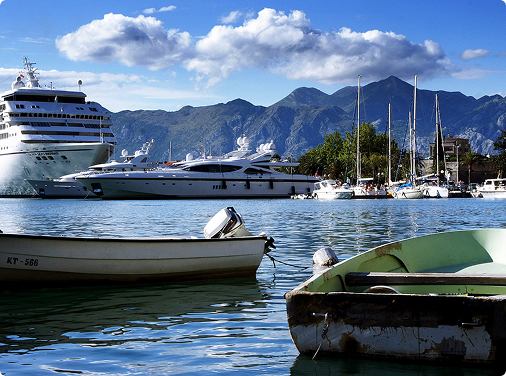
Ask anyone who has tried to bring a boat alongside in a crosswind and they will tell you the same thing: the stern does what you tell it, the bow does what the wind tells it.
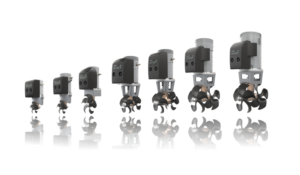
That is the problem a bow thruster solves. A small propeller in a tunnel near the bow pushes the front of the boat sideways, on its own, when the boat is barely moving. It does not make you a better skipper. It takes away the one thing you cannot control at low speed.
Why the bow is the problem
At low speed, all your steering comes from the back of the boat: the propeller and rudder, or the drive leg. The bow has nothing. It is also usually the part that catches the wind first, and it sits furthest from the point the boat pivots around. A gust that barely moves the stern swings the bow straight towards the boat next to you.
A bow thruster gives the bow its own steering. You can hold it off the quay while the stern lines go on, turn the boat in its own length in a narrow channel, leave a berth with another boat close on the downwind side, and correct a gust before it turns into a scrape.
None of this is unusual. It happens most weekends in most marinas.
Who gains the most?
Small crews. If you often moor with two people aboard, one on the helm and one on the lines, the thruster is the third pair of hands.
Boats with a lot of windage. Flybridge cruisers, boats with high bows, sailing yachts that will not turn tightly in reverse.
Anyone mooring in the Baltic in summer. The afternoon sea breeze tends to arrive just as everyone is heading back into harbour.
When to add a stern thruster
A bow thruster solves half the problem. The stern still depends on the engine, and at very low speed or in neutral there is not much steering there either.
With a stern thruster as well, both ends of the boat move independently. Push both the same way and the boat moves sideways. Push them in opposite directions and it turns on the spot. Squeezing into a gap on a busy quay stops being a manoeuvre and becomes a matter of moving the boat across.
It makes the biggest difference on larger boats where the stern catches as much wind as the bow.
Proportional control
Older thrusters are either on or off: full thrust or nothing. A proportional thruster lets you choose — a gentle nudge in a tight berth, full power against a gust. That is the difference between correcting the boat and overcorrecting it.
On boats with a Volvo Penta joystick, a proportional thruster can be connected to the same lever, so you are not juggling a separate thruster panel while docking.
Sizing and installation
A thruster is only as good as its size and its installation. Too small and it will not hold the bow against the wind you bought it for. Tunnel position, battery capacity and cabling matter as much as the thruster itself.
We are the official Sleipner distributor for the Baltic states. Sizing, installation, joystick integration and service are covered on our Sleipner page, and our longer guide how to choose a bow or stern thruster goes into tunnel sizes and installation in more detail.
If you want a first idea yourself, Sleipner’s online Thruster System Builder suggests a setup from your boat’s dimensions. Send us the result and we will check it against your boat.
Talk to us
Thinking about a bow thruster, or adding a stern thruster to the one you have? Call or write to us in Tallinn, Riga or Klaipėda.