
Solution partners


HVO (hydrotreated vegetable oil) is a renewable diesel and one of the most practical ways to run an existing diesel engine on more sustainable energy. It goes into the tank like ordinary diesel, needs no changes to the engine, and depending on what it’s made from, it can cut fossil CO₂ emissions by up to 90%.
The question we hear most often isn’t whether HVO is good for the climate. It’s whether it’s safe for the engine. For the engines we represent, the short answer is yes. This page explains what HVO is, which engines are approved, what changes in daily use, and what to check before you switch.
What HVO is
HVO is made from waste cooking oil, animal fats, residues from food and forestry industries, and vegetable oils. The raw material is treated with hydrogen at high temperature. That process removes oxygen and impurities and leaves a clean hydrocarbon fuel that is chemically very close to fossil diesel.
The result is a fuel that:
- contains no sulphur and almost no aromatics
- has a much higher cetane number than ordinary diesel, so it ignites easily and burns smoothly
- has a lower density than diesel
- meets the European standard for paraffinic diesel fuels, EN 15940
Because it is so close to fossil diesel, HVO can be used on its own or mixed with ordinary diesel in any ratio.
How much CO₂ it saves
Out of the exhaust pipe, an engine running on HVO emits about the same amount of CO₂ as on diesel. The saving comes from where the carbon comes from. The carbon in HVO was taken from the atmosphere by plants, or comes from waste that would otherwise have been thrown away, so it isn’t new fossil carbon released from underground.
Measured over the fuel’s whole life cycle, from raw material to combustion, Volvo Penta quotes a reduction in fossil CO₂ of up to 90% and DEUTZ up to 95%. The actual figure depends mainly on the raw material: HVO made from waste and residues gives the largest reduction.
If you need the reduction for emissions reporting or a tender, ask your fuel supplier for the sustainability documentation for each delivery. That certificate shows the raw material and the calculated CO₂ saving, and it’s what an auditor will look for.
The tailpipe gets cleaner too. HVO produces noticeably less soot and particulates than diesel, while NOx stays roughly the same.
HVO, biodiesel and GTL are not the same
Three fuels are often confused:
- Biodiesel (FAME) is made from vegetable oils by a different process. Up to 7% of it is blended into ordinary road diesel. FAME absorbs water, degrades in storage and can cause problems in engines that stand unused. It is not HVO.
- HVO is renewable and paraffinic, meets EN 15940, and keeps well.
- GTL (gas-to-liquid) also meets EN 15940 and behaves much like HVO in the engine, but it is made from natural gas. It’s cleaner-burning than diesel, but it’s a fossil fuel.
If the reason for switching is CO₂, check that you’re buying HVO, not just “EN 15940 fuel”.
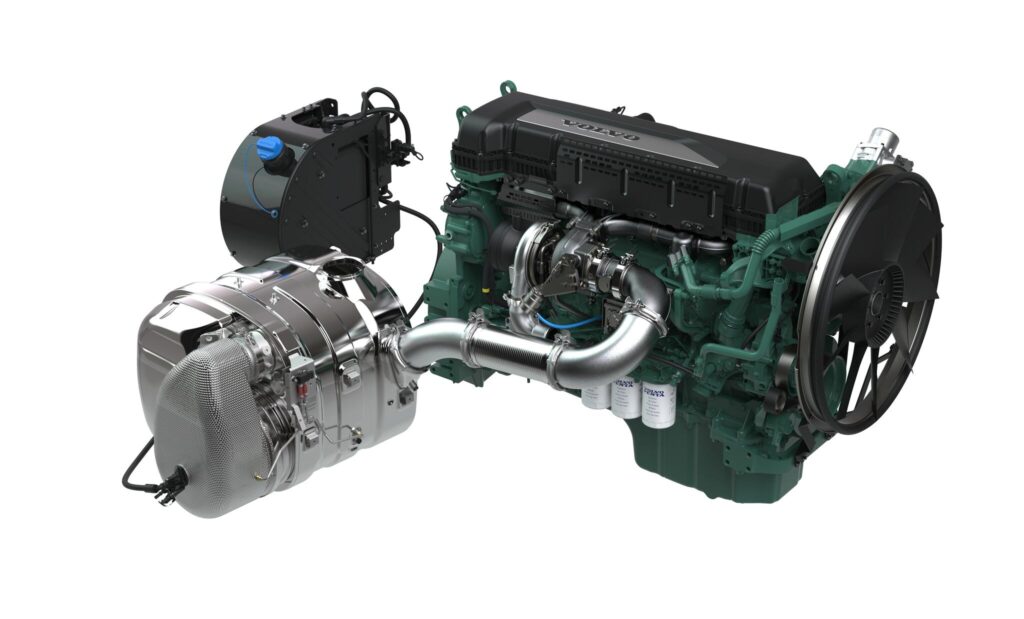
Volvo Penta industrial off-highway engine, suitable for 100% HVO
Which engines are approved
Volvo Penta: all Volvo Penta diesel engines, marine and industrial, are approved for HVO. Volvo Penta announced the approval in 2016. No modifications are needed, service intervals stay the same, and normal warranty conditions apply.
DEUTZ: all DEUTZ engines that meet EU Stage V are approved for HVO, including the whole TCD range. For older DEUTZ engines, approval depends on the engine type. Send us the engine number and we’ll check it against DEUTZ’s fuel specification.
AGCO Power: the new CORE engines (CORE50, CORE75 and CORE80) are designed to run on HVO. For older AGCO Power, Sisu and Valmet engines, ask us before switching.
Mercedes-Benz off-highway engines: ask us with the engine number.
What changes in the engine
Power and consumption. Because HVO is lighter than diesel, a litre contains a little less energy. Expect slightly higher fuel consumption by volume and a small drop in maximum power. In daily use, most operators don’t notice the difference.
Particulate filter. Less soot means the particulate filter on Stage V engines fills more slowly, which is good for the filter.
Fuel filters after switching. HVO can loosen old deposits in tanks and fuel lines. After switching, keep an eye on the fuel filters and change them earlier than usual if they clog.
Older engines. On engines that have run on ordinary diesel for decades, check for fuel leaks for a while after switching. Some older seals react to the change in fuel composition. If you have an older engine and aren’t sure, ask us first.
Storage and winter use
HVO keeps much better than diesel containing biodiesel. It doesn’t attract water in the same way and is less prone to microbial growth in the tank. That makes it a particularly good fit for standby generators and machines that stand unused for long periods.
HVO can be produced with very good cold properties, but grades differ. In winter, check the cold rating with your supplier, as you would with any diesel.
Where HVO makes the most sense
- Standby generators. Fuel that sits in the tank for months stays usable, and the generator starts when needed.
- Machines on construction sites and in cities, where clients and public tenders increasingly ask for lower emissions.
- Boats and workboats in sensitive waters, where a cleaner fuel matters.
- Companies that report their emissions and need to cut direct emissions from engines they already own, without buying new machines.
The main drawback is price. HVO usually costs more than fossil diesel, and availability varies by country and region. Talk to your fuel supplier about price and delivery before you plan a switch.
Before you switch
- Check that your engine is approved. Send us the engine number if you’re unsure.
- Make sure the fuel is HVO certified to EN 15940, and ask for the sustainability documentation if you need it for reporting.
- Plan to check the fuel filters a little earlier after the switch.
- In winter, check the fuel’s cold rating.
Talk to us
If you’re planning to switch a fleet, a generator or a single machine to HVO, contact our teams in Tallinn, Riga or Klaipėda through our contact page. More about the engines: Volvo Penta industrial, DEUTZ and AGCO Power.